Slay the Spire Beginner’s Guide: How a Run Works and How to Survive Act 1
New to Slay the Spire? Learn how a run is structured, what energy, block and intents mean, and the early priorities that get you through Act 1.
Slay the Spire has a reputation for being easy to learn and hard to master, and both halves of that are true. The rules fit on a single screen, yet most new players lose their first several runs somewhere in the first act, often without being sure why. This guide explains how a run is put together, what each part of the combat screen is telling you, and the handful of early decisions that make the biggest difference to surviving Act 1.
Everything here refers to the original Slay the Spire by Mega Crit, which left Steam Early Access and fully released on January 23, 2019, and later came to PlayStation 4, Nintendo Switch, Xbox One, iOS and Android. Its sequel, Slay the Spire 2, entered Steam Early Access in March 2026 with its own characters and changes, so do not assume that every detail below carries over to it.
The Shape of a Run
A run is one attempt to climb the Spire with a single character. You start at the bottom with a small starter deck, a starting relic and a set amount of health. If your health reaches zero, the run is over and you start again from scratch with the same weak deck. Nothing you picked up carries over, although finished runs (won or lost) earn points that unlock new cards, relics and characters over time.
The climb is divided into acts. Each act has its own branching map, its own pool of monsters and ends with a boss. Beating the Act 3 boss counts as winning a standard run, and there is also an optional fourth act that you can reach later by collecting three special keys during a run. For a beginner, the realistic first goal is simply beating Act 1.
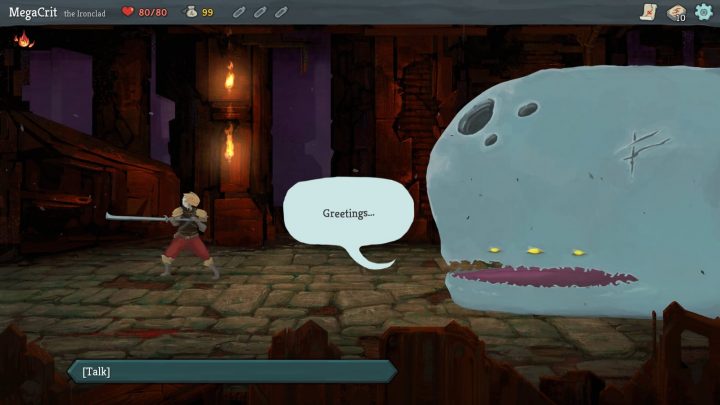
Before the first floor, a whale named Neow offers a choice of starting bonuses, some free and some trading a drawback for a stronger reward. “Remove a card from your deck” is quietly one of the best, for reasons explained below.
The four characters
You begin with only the Ironclad unlocked. The Silent, the Defect and the Watcher unlock as you play (the Watcher was added in a January 2020 update). Each has a different starter deck, starting relic and set of cards. The Ironclad is widely considered the most forgiving for learning: high health, a relic that heals you after every combat, and cards that are easy to read. The rest of this guide uses general principles that apply to all four.
Reading the Map: Node Types
Each act’s map is a grid of rooms connected by paths. You can see the whole map from the start and choose a route by clicking upward one room at a time. Paths branch and merge, so planning a few rooms ahead matters. The main room types are:
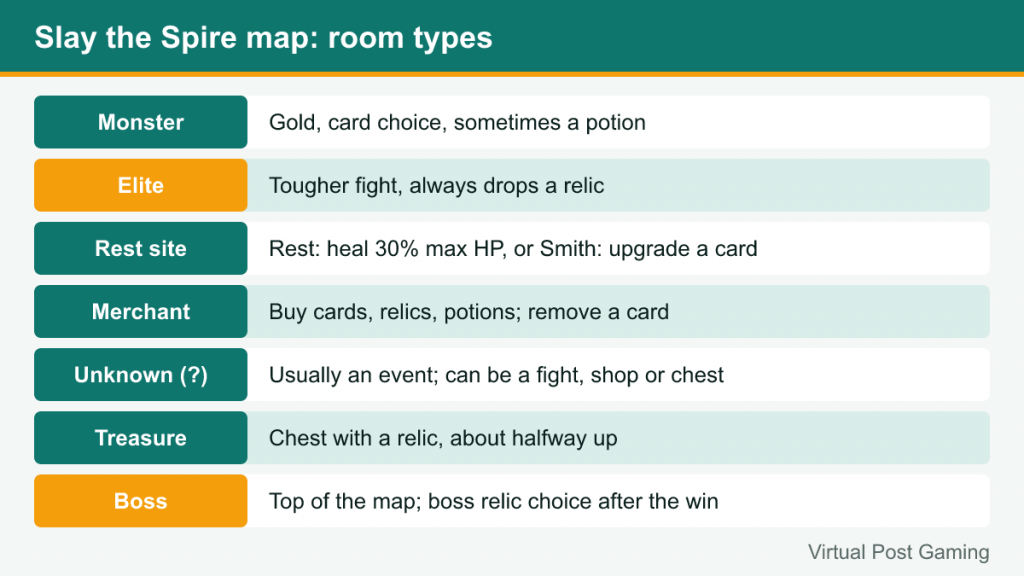
- Monster (normal combat): standard fights. They reward gold and a choice of one of three cards (which you can skip), and sometimes a potion.
- Elite: much tougher fights marked with a horned icon. Elites always drop a relic in addition to gold and a card reward, which makes them the main way to grow stronger.
- Rest site (campfire): choose to Rest and heal 30% of your maximum HP, or Smith to upgrade one card permanently for the rest of the run. Some relics add other options.
- Merchant (shop): spend gold on cards, relics and potions, or pay to remove a card from your deck. Removal gets more expensive each time you use it.
- Unknown (?): usually a text event with choices, but it can also turn into a fight, a shop or a treasure room.
- Treasure: a chest containing a relic and sometimes gold. There is one roughly halfway up each act.
- Boss: shown at the top of the map, so you know in advance which boss you will face. A row of rest sites sits just before it.
Defeating a boss gives you a large heal going into the next act and a choice of three boss relics, which are powerful but often come with a drawback.
How Combat Works
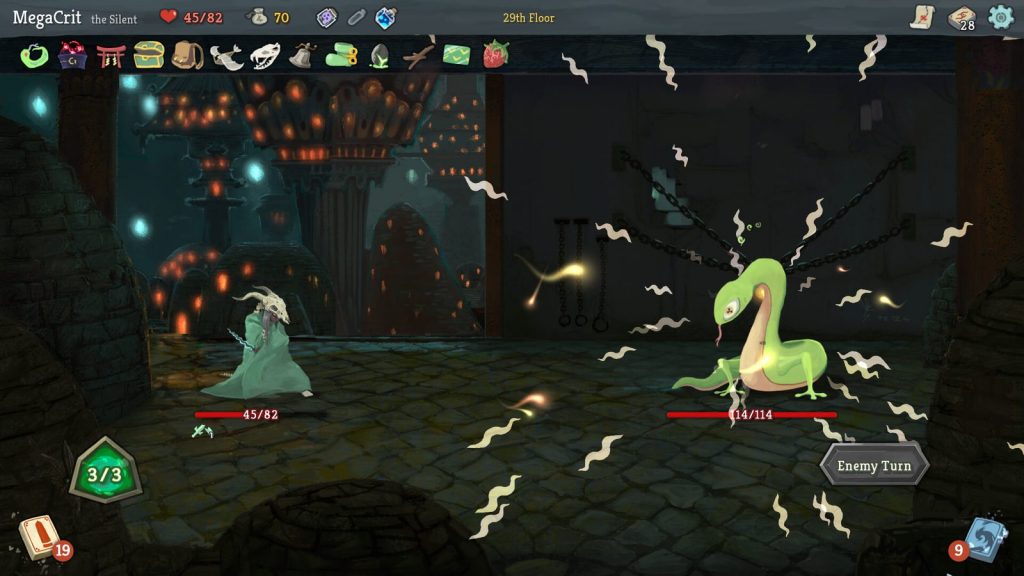
Combat is turn-based. At the start of your turn you draw five cards and receive three energy. Each card shows its energy cost in the top-left corner. You play as many cards as your energy allows, then end your turn. Any cards still in your hand are discarded (unless a card says otherwise), and the enemies act.
Attacks, Skills and Powers
- Attacks deal damage to enemies.
- Skills do everything else that is immediate: gaining block, drawing cards, applying debuffs.
- Powers are played once and stay active for the rest of that combat, such as gaining Strength every turn.
Status and Curse cards are junk added by enemies or events; curses stay until removed.
Block
Block is your shield. Every point of block absorbs one point of incoming damage. The key rule beginners miss: block normally disappears at the start of your next turn. You cannot stockpile it across several turns unless a card or relic specifically says so. That means block is only worth playing when an enemy is actually about to attack.
Intents
This is the feature that makes Slay the Spire a puzzle rather than a guessing game. Above every enemy is an icon showing what it intends to do on its next turn. A sword icon with a number means an attack for that much damage (shown as, say, 6×2 for a multi-hit). Other icons indicate the enemy will block, buff itself, debuff you, or do something unknown. Hovering over the icon gives details.
If no enemy is attacking, you should usually spend everything on offence or setup.
Common debuffs
- Vulnerable: the affected creature takes 50% more damage from attacks.
- Weak: the affected creature deals 25% less attack damage.
- Frail: you gain 25% less block from cards.
Applying Vulnerable before a big attack, or Weak before an enemy’s big hit, is one of the simplest ways to win fights more cheaply.
Relics and Potions
Relics are permanent items for the current run. Each character starts with one, and you collect more from elites, treasure chests, shops, events and bosses. They range from simple bonuses (extra HP, an extra point of block) to effects that reshape your strategy. Relics are always on and cost nothing to use, which is why elite fights are worth the risk once your deck can handle them.
Potions are single-use consumables. You have three potion slots by default, and you can drink one at any point during your turn without spending energy. Typical effects include dealing damage, gaining block, gaining energy, drawing cards or applying debuffs.
The common beginner mistake with potions is hoarding them. A potion that sits in your belt while you die to an elite did nothing, so use them freely in hard fights.
Early-Run Priorities: Surviving Act 1
Act 1 (called Exordium) tests one thing above all: can your deck deal enough damage, fast enough, to beat its three elites and its boss? The elites are Gremlin Nob, Lagavulin and the three Sentries, and the possible bosses are the Slime Boss, Hexaghost and The Guardian. Each punishes a slow deck in a different way. Gremlin Nob gains strength whenever you play a Skill, Lagavulin weakens your Strength and Dexterity the longer it is awake, and Sentries keep shuffling Dazed cards into your deck. Here are the priorities that address that.
1. Add damage first
Your starter deck is mostly basic Strikes and Defends. It can survive the first few hallway fights, but it cannot kill elites quickly enough. In the first few card rewards, prioritise efficient attacks: cards that deal a lot of damage for their cost, hit all enemies, or apply Vulnerable. Defensive cards matter later; early on, killing enemies before they hurt you is the best defence.
2. Do not take every card
Every card reward includes a Skip button, and using it is often correct. Your deck is drawn five cards at a time, so adding a mediocre card makes it less likely you will draw your good cards. Ask whether a card is clearly better than a Strike or Defend and fits what your deck needs. If not, skip. Our introduction to deckbuilders explains why a lean deck tends to be a strong deck.
3. Remove Strikes and Defends
Card removal at shops, events or Neow’s bonus is valuable all run long. Strikes usually go first, because a single Strike deals little damage and your new attacks do the job better. Removing Defends comes a bit later, once you have better sources of block. Fewer basic cards means you draw your strong cards more often.
4. Fight elites when you can
It can feel safer to avoid elites, but relics are how decks become strong enough for Acts 2 and 3. If your deck is still all starter cards, wait; if you have two or three good attacks and decent HP, the elite is usually worth it.
5. Plan your route around rest sites
A good path has some normal fights early to build your deck, an elite or two in the middle and a rest site after each dangerous stretch. Avoid chaining several elites with no rest in between.
6. Rest or upgrade?
At a campfire, healing is correct when you are low or facing an elite or boss next. If your HP is comfortable, upgrading a key card is usually the better long-term value, because the improvement lasts the rest of the run. A common habit is to upgrade your best attack or the card you play most often.
Turn-by-Turn Habits That Save Runs
Many runs are lost not to bad drafting but to small mistakes inside fights. These habits help:
- Count incoming damage before playing anything. Add up all attack intents, then decide how much block you need.
- Play debuffs before damage. Apply Vulnerable first, then attack, so the bonus counts.
- Target the dangerous enemy. In multi-enemy fights, killing the hardest hitter or the one that buffs others usually saves more HP than spreading damage.
- Check the draw and discard piles. Clicking them shows what is still to come, which changes how you play this turn.
- Take some damage when it is efficient. If accepting 5 damage lets you kill an enemy a turn earlier, that is often the better trade.
One more habit belongs here: use the boss icon. The act boss is visible on the map from the start, so if you know you face the Slime Boss, for example, you can draft with its split mechanic in mind.
Frequently Asked Questions
Which character should I learn first?
Start with the Ironclad, both because the game makes you and because its healing relic covers many early mistakes. The others introduce more complicated mechanics such as poison, orbs and stances.
What is Ascension?
After you win a run with a character, you unlock Ascension levels for that character. Each level adds a cumulative handicap, up to Ascension 20. They are the game’s long-term difficulty ladder and can be ignored until you are winning regularly.
Once these basics feel natural, the deeper layer opens up: building toward a plan, scaling for long boss fights and reading which relics change your priorities. It all starts with an Act 1 deck that hits hard and stays lean.