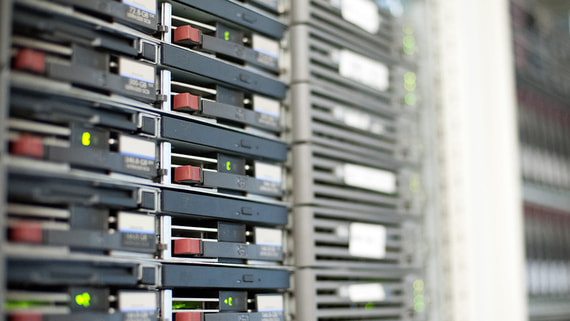
Server equipment costs in Russia have experienced a significant increase in recent months, creating new challenges for businesses and data centers across the country. The price surge comes as a direct consequence of skyrocketing global prices for RAM (random access memory) modules, which have been driven upward by the explosive growth of artificial intelligence technologies worldwide. This development adds another layer of complexity to Russia’s already challenging technology sector, which has been navigating international sanctions and supply chain disruptions.
The memory chip shortage has become a global phenomenon, with manufacturers struggling to keep pace with unprecedented demand from AI companies, cloud service providers, and data center operators. Industry analysts estimate that RAM prices have increased by 20-30% over the past year alone, with some high-performance server memory modules seeing even steeper price hikes. For Russian companies, these global market pressures are compounded by additional logistical challenges and import restrictions.
The AI Revolution’s Impact on Hardware Markets
The artificial intelligence industry has fundamentally transformed the global semiconductor market. Training large language models and running AI inference workloads requires massive amounts of memory, with modern AI servers often containing hundreds of gigabytes or even terabytes of RAM. Companies like NVIDIA, AMD, and Intel have reported unprecedented demand for their data center products, while memory manufacturers such as Samsung, SK Hynix, and Micron have been unable to expand production quickly enough to meet market needs. This supply-demand imbalance has created a seller’s market, pushing prices steadily upward throughout the global supply chain.
The situation is particularly acute for DDR5 memory modules, which offer the performance characteristics required for modern AI workloads. Production capacity for these advanced chips remains limited, as manufacturers continue to transition their fabrication facilities from older DDR4 technology. Industry experts predict that the memory shortage could persist well into 2025 or beyond, as the AI boom shows no signs of slowing down and new applications continue to emerge across virtually every sector of the economy.
Challenges for the Russian Technology Sector
For Russian enterprises, the global memory shortage creates unique difficulties. International sanctions have restricted access to cutting-edge semiconductor technology, forcing companies to rely on alternative supply channels and older equipment. The combination of higher global prices and limited import options has resulted in server costs that are significantly higher than in other markets. Small and medium-sized businesses, as well as domestic cloud service providers, face particularly difficult decisions about infrastructure investments and capacity expansion.
Despite these challenges, Russian data centers continue to expand to meet growing domestic demand for digital services. The government has emphasized digital sovereignty and the development of domestic technology capabilities, leading to increased investment in local server infrastructure. However, the current price environment means that these projects come with substantially higher costs than originally anticipated. Some industry observers suggest that this could accelerate efforts to develop domestic semiconductor manufacturing capabilities, though such initiatives would require years of sustained investment to yield results.
Looking Ahead: Market Forecasts and Industry Response
Market analysts expect server prices to remain elevated throughout 2024 and potentially into 2025, as the fundamental drivers of the memory shortage show no signs of abating. The continued expansion of AI capabilities by major technology companies, combined with growing enterprise adoption of AI tools, suggests that demand for high-performance server hardware will only increase. Memory manufacturers have announced plans to expand production capacity, but new fabrication facilities require years to construct and bring online. In the meantime, businesses across Russia and around the world will need to adapt to a new reality of higher infrastructure costs, potentially delaying technology upgrades or seeking alternative solutions to manage their computing needs more efficiently.
Expert Opinion: The convergence of AI-driven demand growth and constrained semiconductor supply represents a structural shift in technology markets that will persist for several years. Russian enterprises should anticipate continued price volatility and consider strategic partnerships, longer hardware refresh cycles, and cloud-based alternatives to manage costs. The companies that adapt most quickly to this new environment will gain competitive advantages as the market eventually stabilizes.