How to Draft a Deck in Roguelike Deckbuilders: Thinning, Synergy and Skipping Cards
Transferable drafting principles for roguelike deckbuilders: deck size, card removal, skipping rewards, scaling vs frontloaded damage, defense and engines.
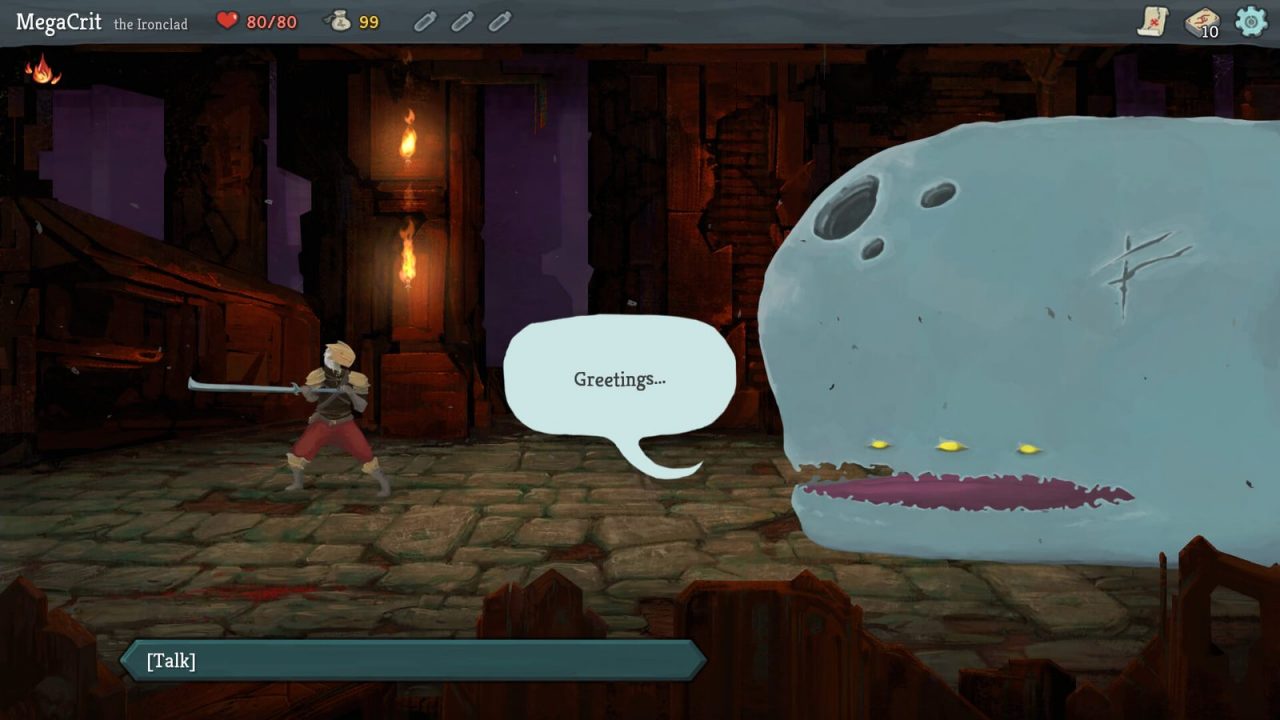
In a roguelike deckbuilder, you do not arrive with a finished deck. You start with a handful of weak basic cards and add to them one reward at a time, building the deck as the run unfolds. Every fight ends with a choice: take one of these cards, or take nothing. Those small decisions, repeated dozens of times, are where most runs are won or lost.
This guide covers drafting principles that transfer across the genre. The examples come mainly from Slay the Spire and Monster Train, two games that shaped how players think about the genre, but the ideas apply to most turn-based deckbuilders. If you are new to the genre itself, our explainer on what a deckbuilder is covers the basic loop first.
Why Drafting Is Different from Constructed Deckbuilding
In a collectible card game, you build a deck before play from a large collection, and you know every card that will be in it. In a roguelike deckbuilder, the options appear randomly, you see them once, and you cannot take most of them back. Three differences follow:
- You must plan with incomplete information. You do not know what the next reward will offer, so you balance immediate needs against future possibilities.
- The deck must survive the whole journey. Fights early in the run demand different things than bosses at the end.
- Adding a card is not free. Every card you take makes every other card in your deck slightly less likely to appear in a given hand.
That last point is the foundation of everything else.
Deck Size and Consistency
A roguelike deckbuilder deck is shuffled and drawn a few cards at a time. In Slay the Spire, you draw five cards per turn by default. If your deck contains your best card plus nine weak ones, you see that best card about half the time in a given hand. If the deck grows to thirty cards with that same single great card, you see it much less often.
That is why experienced players often prefer a smaller, more focused deck. Each card you add should make the average hand better, not just add an option. A useful test when looking at a reward is: would I be happy to draw this card instead of the average card already in my deck? If not, consider leaving it.
The principle has exceptions. Some strategies want a large deck, for example ones that rely on many cheap cards or that benefit from cards being played many times over a long fight. But for most beginner and intermediate runs, a lean deck is a reliable default.
Card Removal and Thinning
Most runs begin with basic attack and defense cards. In Slay the Spire, the Ironclad starts with five Strikes, four Defends and a single Bash. These cards are fine on the first floor and steadily become dead weight as enemies grow stronger. Removing them is called “thinning” the deck.
Where removal comes from
- Shops usually offer a paid card removal service. In Slay the Spire the price rises each time you use it.
- Events sometimes let you remove or transform cards.
- Cards and effects that exhaust or consume other cards during combat act like temporary thinning for that fight.
In Monster Train, the stops between battles offer card upgrades and opportunities to remove cards, which serve the same purpose: making each draw more likely to be something useful.
What to remove first
Basic attacks are usually the first targets because the best damage cards outperform them early. Basic defense cards are often kept longer, since block is harder to find. Curses and status cards, which take up space without helping, are almost always removed when possible.
When to Skip a Card Reward
Skipping rewards feels wasteful, but it is one of the clearest differences between new and experienced players. Every major roguelike deckbuilder lets you decline card rewards, and that option exists for a reason.
Consider skipping when:
- None of the cards solves a current problem. If you need defense and the reward offers three mediocre attacks, adding one may make defending harder.
- A card is good in general but bad for your deck. A strong card that needs a strategy you are not running dilutes the deck.
- Your deck is already working. Late in a run, when the deck can handle bosses, additions can only disrupt it.
Take the card anyway when your deck is clearly missing something the card provides, such as damage in the first act, or when it is strong enough on its own to improve almost any hand.
Frontloaded Damage vs Scaling
Damage in deckbuilders comes in two shapes:
- Frontloaded damage hits hard immediately: a big attack card that deals a lot of damage this turn.
- Scaling starts slowly and grows over the fight: effects that permanently increase your strength, poison that stacks, or powers that add damage each turn.
Early in a run, fights are short and enemies are relatively weak, so frontloaded damage is what keeps you alive. Many first-act deaths in Slay the Spire come from decks that took slow, clever cards before they had enough raw damage to kill elites quickly.
Later, bosses and elites have much more health and grow stronger the longer a fight lasts. A deck that cannot scale eventually runs out of steam. A healthy run usually takes frontloaded damage first, then looks for one or two reliable scaling sources by the middle of the run.
Area damage
Some fights throw several enemies at you at once. A deck with only single-target attacks can struggle there, so one or two cards that hit every enemy are worth watching for. In Monster Train, where enemies advance up a train with several floors, the equivalent question is whether your defense can handle groups as well as single large threats.
Defense Is Not Optional
New players often draft attack after attack. Attacking is satisfying and ends fights faster, but bosses and elites hit hard enough that a deck with no reliable defense will lose most of its health in a few fights.
Defense comes in several forms:
- Block or shield cards that prevent incoming damage.
- Weakening effects that reduce how much enemies deal.
- Killing quickly, which is a form of defense in itself because dead enemies do not attack.
- Durable units in games like Monster Train, where your monsters absorb damage on each floor.
The goal is balance. A deck should be able to handle a turn where the enemy announces a big attack, and also kill enemies before they scale. The ideas here mirror the tension between tempo and card advantage in constructed games, described in our guide to card game fundamentals.
Building Around Engines and Synergy
An engine is a combination of cards and relics or artifacts that reinforce each other, producing an effect much stronger than any individual card. Examples include a deck that generates energy and draws repeatedly, or one where every card played adds poison or strength.
Engines win runs, but chasing them too early loses runs. A few guidelines:
- Do not force an archetype on the first floor. Take good cards first and let the run show you what it offers.
- Commit when you have the key piece. Once a run gives you a card or relic that defines a strategy, start valuing its supporting cards more highly.
- Keep a backup plan. An engine that needs three specific cards in hand is fragile. Make sure the deck can still function when it draws badly.
- Value enablers over payoffs early. Enablers make a strategy possible; payoffs reward it. Taking payoffs with no enablers leaves you with dead cards.
In Monster Train, the choice of primary and allied clan at the start of a run steers which synergies are available, so it is useful to think about how the two clans complement each other before the first battle.
Reading What the Run Needs
The best drafters constantly ask, “What will kill this run?” The answer changes as the run progresses:
| Stage | Typical threat | Draft priority |
|---|---|---|
| Early run | Elites with high damage | Frontloaded damage, a little defense |
| Middle run | Multi-enemy fights, longer battles | Area damage, scaling, card removal |
| Late run | Bosses with heavy scaling | Consistency, strong defense, engine completion |
Relics, artifacts and other passive bonuses also change what the deck needs. A relic that rewards playing many cards makes cheap cards more valuable; one that boosts defense might let you lean harder into attacks. Treat every pickup as a hint about where the deck should go.
Knowing the upcoming boss, which Slay the Spire shows on the map for each act, is another strong signal. If you know the boss punishes long fights or multiple cards per turn, you can draft accordingly. Our Slay the Spire beginner’s guide covers how the map and node types work.
Common Drafting Mistakes
Taking every rare card
Rarity does not equal fit. A powerful rare that needs a completely different deck can be worse than a common that fills a hole.
Never removing basic cards
Spending gold on removal feels less exciting than buying new cards, but it often improves the deck more.
Drafting for the boss too early
You have to reach the boss first. Survive elites and hallway fights before optimizing for the last fight of the act.
Over-committing to a plan
If the run refuses to give you the pieces for an engine, pivot. Many strong runs end up nothing like the plan from the first floor.
A Short Drafting Checklist
- Does this card make my average hand better?
- Does it solve the problem most likely to end the run soon?
- Does it fit with what I already have, or does it need a different deck?
- Can I afford to skip and wait for something better?
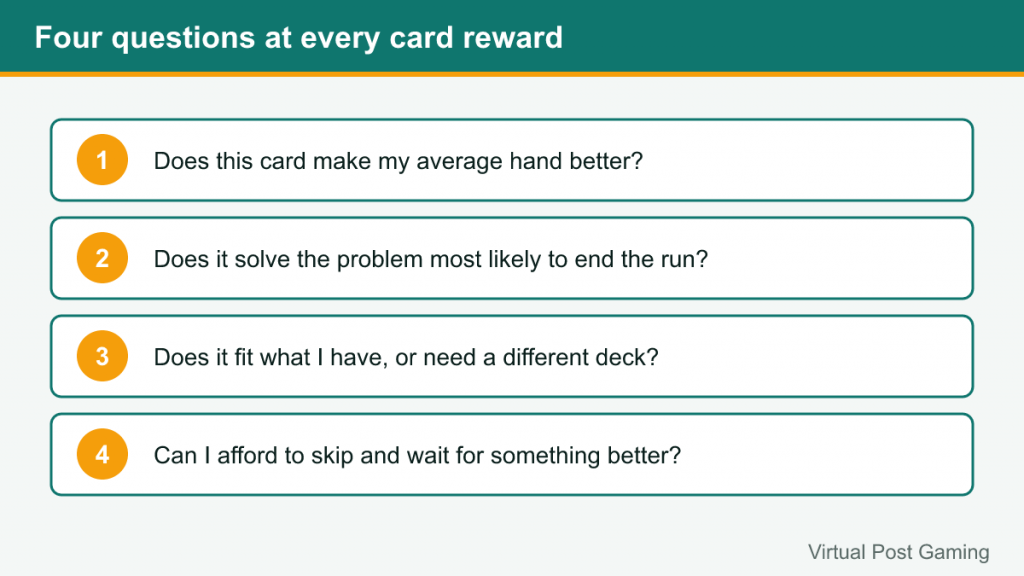
Run these four questions at every reward screen, and drafting becomes much less of a guess. Over time, the answers turn into instinct, and you start recognizing which offers matter at a glance.