The History of Tetris: From Alexey Pajitnov’s Prototype to a Global Classic
How a puzzle written at a Soviet research center in the mid-1980s became a global classic, through a licensing tangle, a Game Boy bundle and The Tetris Company.
Few games have a history as tangled as Tetris. It was written by a researcher on a Soviet computer with no graphics, copied freely across Moscow, licensed to Western companies by people who did not actually hold the rights, and fought over in court by some of the biggest names in the industry. Out of that confusion came one of the best-selling and most widely recognised games ever made. This is the story, kept to what reliable sources agree on.
A Puzzle at the Academy of Sciences
In the mid-1980s, Alexey Pajitnov was a researcher at the Dorodnitsyn Computing Centre of the Soviet Academy of Sciences in Moscow, where he had joined in 1979 to work on speech recognition. He also liked to write small puzzle programs on the centre’s computers to test new machines.
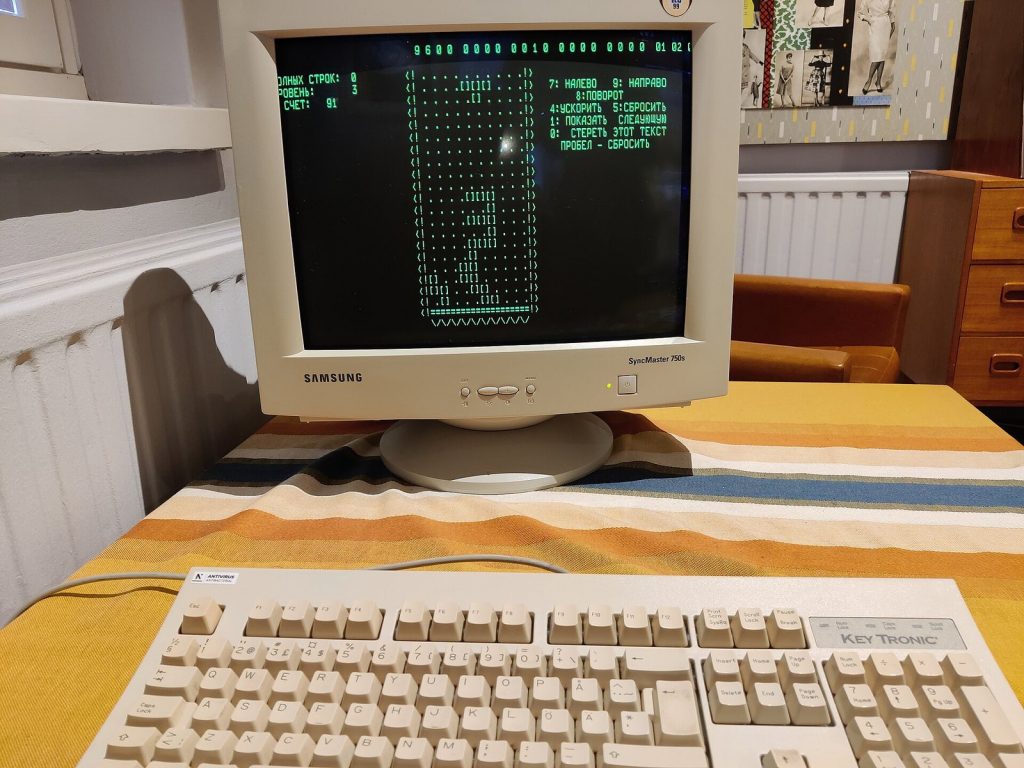
The inspiration was a physical puzzle: a set of pentominoes, shapes made from five squares, which he played with in his office. Pajitnov simplified the idea to pieces of four squares, giving seven possible shapes, and turned the puzzle into a real-time game where pieces fall into a well and completed rows disappear. The name combined “tetra,” the Greek prefix for four, with tennis, his favourite sport.
Sources disagree slightly on exactly when the first version was finished. Pajitnov has recalled starting work in June 1984, while in an earlier interview he placed the completion in 1985. Either way, the first version ran on an Elektronika 60, a Soviet computer without a graphical display. Pieces and the playing field were drawn with spaces and bracket characters.
The PC version spreads
The Elektronika 60 was not a widely available machine, so Tetris was ported to the IBM PC, with help from colleagues Dmitry Pavlovsky and the teenage programmer Vadim Gerasimov. The PC version added color and a scoreboard. Because there was no commercial software market in the Soviet Union, copies simply spread from computer to computer. By 1986, the game had circulated widely around Moscow and had been copied beyond the country, including to an institute in Budapest.
Pajitnov, as an employee of a state institution, did not own the game in a commercial sense. That fact sits at the heart of everything that followed.
The Licensing Tangle Begins
In Hungary, the game caught the attention of Robert Stein, head of a British software company called Andromeda. Recognising a hit, he set out to license it. Stein contacted Pajitnov and began negotiating, but the communication was slow and, crucially, Pajitnov was not in a position to sign a commercial deal. Stein went ahead and sold rights onward before he had a signed agreement from the Soviet side.
Stein sublicensed Tetris to Mirrorsoft, the British software publisher owned by media magnate Robert Maxwell, and to its American affiliate Spectrum HoloByte. Mirrorsoft released Tetris in the UK on January 27, 1988, and Spectrum HoloByte released it in the US two days later. Spectrum HoloByte’s version leaned into its Soviet origin with Russian-themed artwork, a novelty at the height of interest in the Soviet Union during the late Cold War.
Elorg enters the picture
Soviet software exports were controlled by a state organisation called Elektronorgtechnica, or Elorg, which held a monopoly on importing and exporting computer software and hardware. Elorg took over negotiations on behalf of the Computing Centre, and an agreement with Stein was finalised in 1988. That agreement covered computer versions of the game. The question of who owned the rights for consoles and handheld devices would soon become the industry’s most important legal argument.
Meanwhile, sublicences multiplied. Mirrorsoft and Spectrum HoloByte passed console rights in different territories to other companies, including Atari Games, whose Tengen label was preparing a Nintendo Entertainment System version. In Japan, the rights flowed to several companies, and Nintendo released a Famicom version in December 1988.
Henk Rogers, Nintendo and the Game Boy
Henk Rogers, a Dutch-born game developer and publisher based in Japan, saw Tetris at the Winter Consumer Electronics Show in 1988 and became convinced of its potential. His company, Bullet-Proof Software, released Tetris for Japanese computers in November 1988.
Rogers was working with Nintendo, which was about to launch the Game Boy. Nintendo of America’s leadership believed Tetris could be the perfect game to show off the new handheld. But who held the handheld rights? Rogers’s attempts to get answers through Stein stalled, so in February 1989 he travelled to Moscow himself and met Elorg directly.
That trip changed everything. Elorg made clear that it had licensed only computer rights to Stein. Rogers secured the handheld rights for Nintendo, and console rights for Nintendo soon followed. Representatives of Stein and of Robert Maxwell’s companies were also in Moscow around the same time, and the competing claims became a story of its own, dramatised much later in the 2023 film Tetris.
The court fight with Atari Games
Atari Games, through Tengen, believed its sublicence from Mirrorsoft gave it the right to release Tetris on the NES, and Tengen put out its version in May 1989. Nintendo disagreed. On June 22, 1989, US District Judge Fern Smith granted Nintendo a preliminary injunction, and Atari withdrew its version almost immediately. In November 1989 the court ruled in Nintendo’s favour, confirming that the console rights had never been included in the computer licence. Tengen’s version, pulled from shelves after a short time, became a collector’s item.
The Game Boy bundle
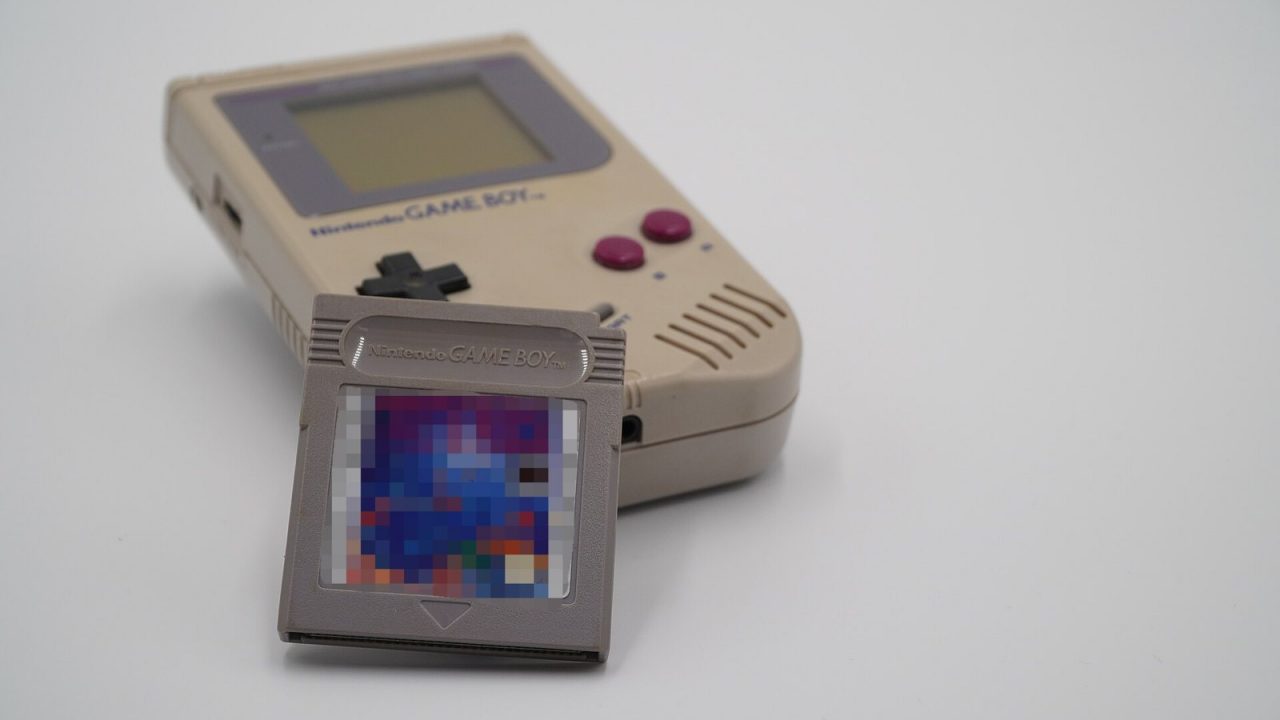
Game Boy Tetris launched in Japan on June 14, 1989, and in North America on July 31, 1989, where it was packed in with the Game Boy itself. The pairing was ideal: a simple, endlessly replayable game on a portable machine, with a link-cable mode for two players. It was also the first game to support the Game Link Cable, and it went on to sell more than 35 million copies worldwide (a figure reported as of 2009, including bundles), and the combination did a great deal to establish both the handheld and the game as household names. Nintendo also released its own NES version in 1989, the edition that later became the basis of classic competitive play.
Pajitnov’s Rights and The Tetris Company
For years, Pajitnov did not profit from his creation in the way a Western developer would have, because the rights belonged to the state under the arrangements of the time. He continued to design puzzle games, including follow-ups such as Welltris and Hatris, and in 1991 he moved to the United States, settling in Seattle with help from Rogers.

Under the original arrangement with the Computing Centre, the rights were held for a limited period, and they reverted to Pajitnov at the end of 1995. In 1996, Pajitnov and Rogers formed The Tetris Company, structured as a partnership between Elorg and Rogers’s Blue Planet Software, to manage the brand and its licensing. For the first time, Tetris had a single organisation controlling it, with its creator involved. Rogers later acquired Elorg itself, in 2005.
Standardisation: The Tetris Guideline
Before The Tetris Company, Tetris games varied widely. Pieces had different colours, rotated in different ways, and followed different random rules. With central licensing came consistency. Features started appearing that would become standard: hold was added in The New Tetris in 1999, and Tetris Worlds in 2001 introduced the Super Rotation System that underpins modern games.
The resulting rulebook, known as the Tetris Guideline, sets common rules for official games: piece colours, the 7-bag randomizer, rotation and wall kicks, lock delay, T-spin recognition and scoring. We explain each of these in detail in how modern Tetris works. The Guideline is the reason a player can move between official Tetris games and find the fundamentals familiar.
Later Milestones
Tetris never stopped being released. A few landmarks stand out:
- Mobile Tetris. A mobile version appeared in Japan in 2001, and Electronic Arts held the mobile licence for years before it expired in 2020, when N3twork took over authorised mobile releases.
- Puyo Puyo Tetris (Sega, first released in Japan in 2014) combined Tetris with Sega’s falling-blob puzzler, including modes where players of each game compete head-to-head.
- Tetris Effect (2018, PlayStation 4; Windows in 2019), developed by Monstars and Resonair with Tetsuya Mizuguchi, wrapped classic play in music and visual effects that react to every move.
- Tetris 99 (2019) turned Tetris into a 99-player battle royale for Nintendo Switch Online subscribers, where line clears send garbage to opponents.
- The film Tetris premiered on Apple TV+ on March 31, 2023, dramatising the licensing story with Taron Egerton as Henk Rogers.
- Tetris Forever (November 2024), from Digital Eclipse, collected historic versions alongside documentary material about the game’s history.
Classic NES Tetris also enjoyed a remarkable second life as a competitive game, culminating in December 2023 when a teenage player, Willis Gibson, played so far into the game that it crashed, a milestone widely reported as the first time anyone had “beaten” NES Tetris.
How many copies?
Counting Tetris sales is difficult because of the huge number of versions and platforms. In 2022, The Tetris Company reported more than 520 million copies sold across all versions, a figure that includes a very large share of mobile downloads. Whatever the exact number, it places Tetris among the best-selling game franchises of all time.
Why Tetris Endured
Tetris has survived through nearly every era of gaming, from Soviet research computers to battle royales. Part of the reason is the design itself: seven shapes, one rule for clearing lines, and endless combinations. It requires no explanation, crosses language barriers effortlessly, and scales from casual play to elite competition. The pieces fall faster, the decisions get tighter, and yet the basic question never changes: where does this piece go?
Its history also reflects the period in which it was made. A game created inside a planned economy became a commercial phenomenon in a market economy, and the confusion over who could sell it was a direct result of those two systems meeting. The fact that its creator eventually gained control of his own game, more than a decade later, is one of the more satisfying endings in game history.
Timeline at a Glance
| Date | Event |
|---|---|
| 1984–1985 | Pajitnov creates Tetris on the Elektronika 60 at the Dorodnitsyn Computing Centre |
| 1985–1986 | IBM PC version created; copies spread across Moscow and abroad |
| January 1988 | Mirrorsoft (UK) and Spectrum HoloByte (US) release Tetris for home computers |
| February 1989 | Henk Rogers meets Elorg in Moscow; Nintendo secures handheld rights |
| June–July 1989 | Game Boy Tetris launches in Japan and North America |
| November 1989 | Court rules for Nintendo over Atari Games on console rights |
| 1991 | Pajitnov moves to the United States |
| 1996 | The Tetris Company is formed after rights revert to Pajitnov |
| 2001 | Tetris Worlds introduces the Super Rotation System |
| 2018–2019 | Tetris Effect and Tetris 99 released |
| 2023 | The film Tetris premieres; NES Tetris crashed in play for the first time |