How to Get Better at Puzzle Games: Techniques That Work Across Genres
Practical problem-solving techniques for puzzle games: map the rules, work backwards, isolate the constraint, test small ideas, take breaks and use hints well.
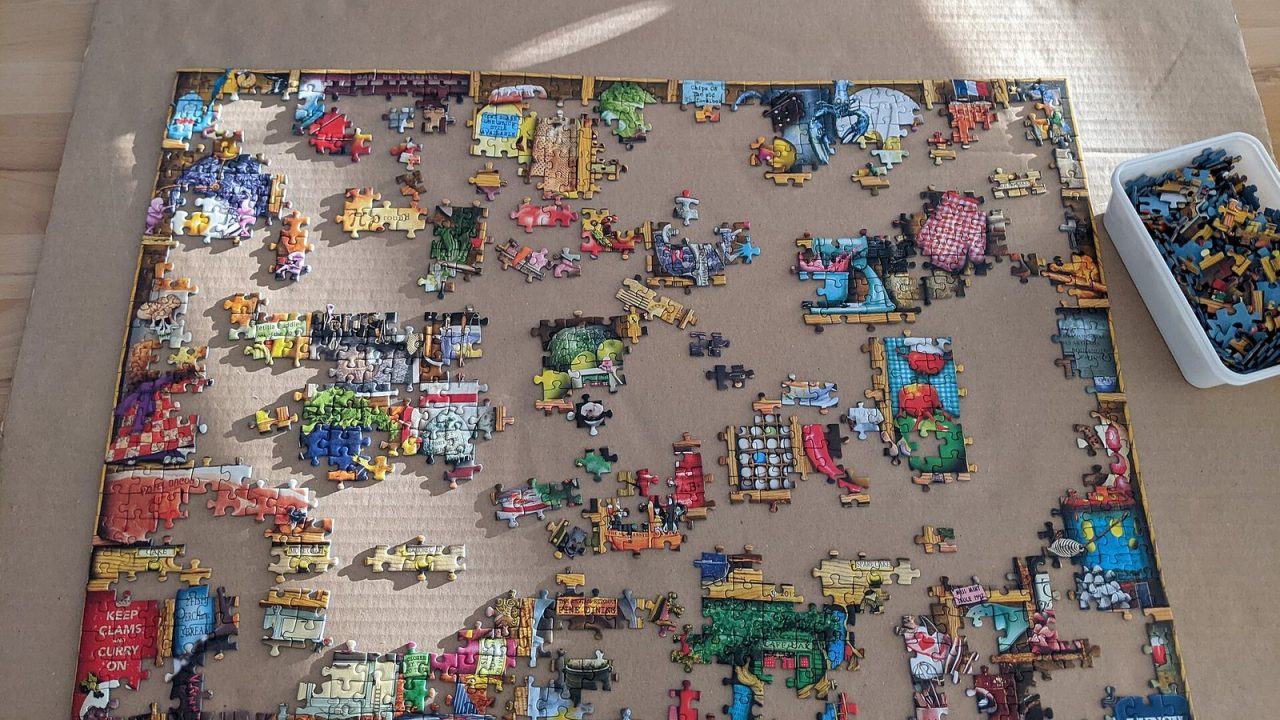
Being stuck is the point of a puzzle game. The best ones are designed so that you will hit a wall, stare at the screen and eventually see something that was there the whole time. But there is a difference between being productively stuck and simply going in circles. Players who seem naturally good at puzzles are usually using a handful of habits, often without realizing it.
This guide collects those habits into techniques you can practice. They work across subgenres, from box-pushing grids to first-person test chambers, and they are illustrated with examples from Baba Is You, The Witness, Portal and Sokoban-style games, without spoiling specific solutions.
Start by Writing Down the Rules
Every puzzle game is a system of rules. The first step in solving any level is knowing exactly what those rules are, including the ones you have assumed rather than confirmed.
Try listing, in plain words, what you know:
- What can I move or change?
- What blocks me?
- What is the goal, precisely?
- Which mechanics has the game introduced so far?
In Baba Is You, this is literal: rules such as WALL IS STOP sit on the screen as word tiles, and a solid first move is to read every active rule and every loose word. Our Baba Is You explainer covers how that system works. In other games the rules are implicit, so writing them down makes them visible. You will often notice that one “rule” you were following was never actually stated by the game.
Check your assumptions
Many puzzles are designed around a natural assumption that turns out to be wrong. Can a box be pushed off the edge? Does a portal work on this surface? Does the order of moves matter? When stuck, list your assumptions and test each one deliberately.
Work Backwards from the Goal
Many puzzles are easier from the end than from the beginning. Ask: what must be true in the final moment for the puzzle to be solved? Then ask what must be true one step before that, and so on.
In a Sokoban-style box-pushing puzzle, for example, consider which box must go onto the final target last. To get there, from which side must it be pushed? Where must the player be standing to make that push? Working backwards quickly reveals which paths need to stay open and which squares must not be blocked.
The technique is a long-established problem-solving strategy. The mathematician George Pólya described working backwards as one of the classic heuristics in his 1945 book How to Solve It, and it applies just as well to video game puzzles as to geometry.
Isolate the Constraint
Most puzzles have one central difficulty, a single constraint that makes the obvious approach fail. Identifying it narrows the search dramatically.
Ask: “Why can’t I just do the obvious thing?” The answer is the constraint. Maybe the exit is unreachable, or a box would block a corridor, or a line in a panel must pass through a cell that forces it into a dead end. Once named, the constraint becomes the problem you are actually solving.
Look for the element that seems unnecessary
Designers rarely include objects for decoration in tightly designed puzzle games. If a level contains a lever, block, word tile or symbol that seems to do nothing, it is very likely part of the solution. Asking “why is this here?” is often the fastest route to the key idea.
The reverse is also useful: if the level is very small, every element matters. If a solution would leave several pieces unused, it is probably not the intended one, or there is something about those pieces you have not understood yet.
Test Small Hypotheses
When you do not know how something works, run an experiment. Make a single change and watch the result. In puzzle games with unlimited undo, experiments are free.
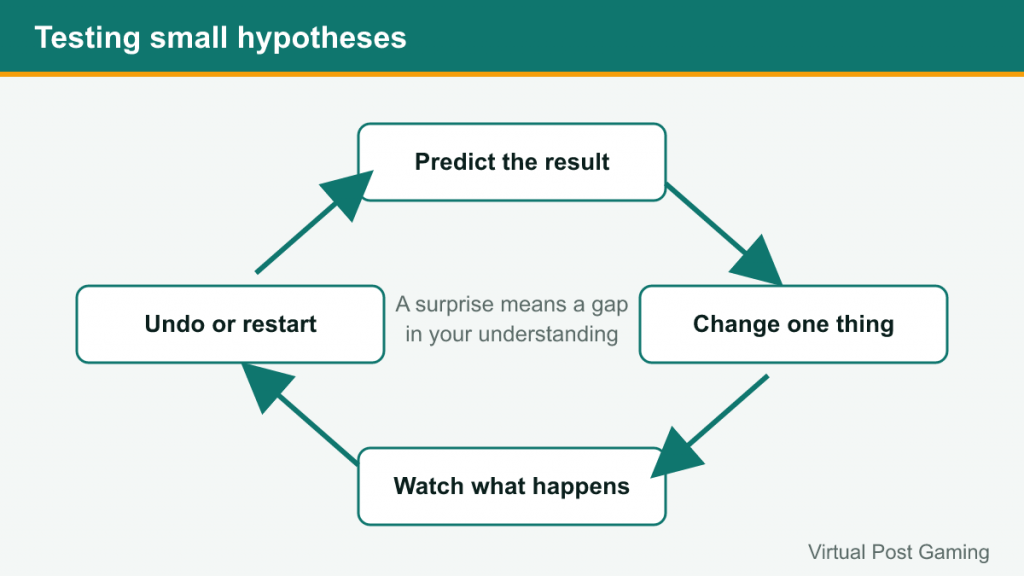
- Change one thing at a time. If you make several moves and something unexpected happens, you will not know which move caused it.
- Predict before acting. Say what you expect to happen. When the result surprises you, you have found a gap in your understanding.
- Use restarts and undo freely. Baba Is You, most Sokoban-style games and many others make undo unlimited, so there is no cost to trying an idea and rewinding.
In first-person games like Portal, experiments look slightly different: try placing a portal on an unusual surface, or see what happens when an object passes through at speed. The chamber design often teaches a mechanic through exactly this kind of play, introducing one element in a safe room before combining it with others.
Learn the Game’s Vocabulary
Puzzle games usually introduce mechanics one at a time and then combine them. The early levels that teach a mechanic are not just warm-ups; they are the dictionary for the rest of the game.
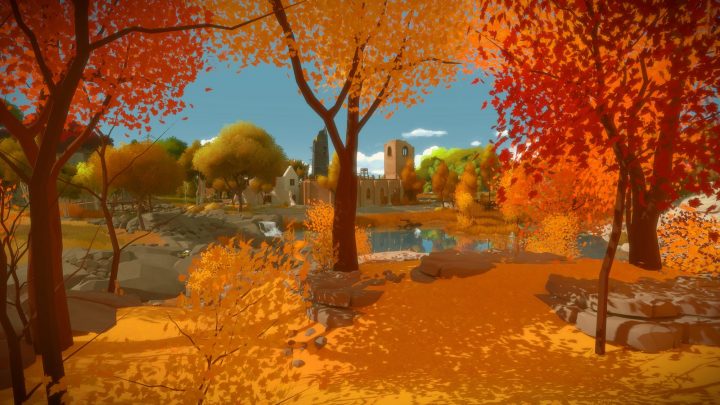
The Witness is a strong example. Its panel puzzles teach the meaning of each symbol through sequences of panels without any text, and later puzzles assume you remember what each symbol means. If you are stuck on a later panel, the best move is often to revisit the earlier sequence that taught one of its symbols. Our spoiler-free guide to The Witness discusses that approach in more depth.
A useful habit is to keep brief notes as each mechanic is introduced: “red blocks fall when nothing is under them,” “these tiles can only be crossed once.” When an advanced puzzle combines three mechanics, you can check your notes for interactions you may have forgotten.
Take Notes and Sketch
Paper is an underrated puzzle tool. It reduces the load on working memory, which is limited, and it lets you see a problem from outside the game’s interface.
- Draw the grid. For box-pushing or logic puzzles, a rough sketch lets you plan moves without fiddling with controls.
- List rule combinations. In rule-manipulation games, writing out every sentence you could form often reveals one you had overlooked.
- Record failed attempts. Noting why an approach failed stops you from trying it again and often points to the constraint.
- Use pencil marks for logic grids. In nonograms and number-placement puzzles, marking possibilities and eliminations is a standard technique.
Take Breaks Strategically
Many puzzle players have had the experience of returning to a level after a break and seeing the answer almost immediately. Stepping away interrupts a fixed line of thinking, so when you return you are more likely to try something different.
Good times to take a break:
- When you notice you are repeating the same attempts.
- When you are frustrated rather than curious.
- After a long session, when your attention starts to slip.
Many puzzle games make breaks easy by letting you skip to another level. Solving something else often teaches an interaction you can use on the level that was blocking you.
Use Hints Responsibly
There is no shame in looking for help, but full solutions can take away the satisfaction that makes puzzle games worthwhile. The goal is to get the smallest nudge that unblocks you.
- Use built-in hint systems first. Some games offer graded hints that reveal a little at a time.
- Ask for direction, not answers. If you play with friends, ask “which element matters?” rather than “how do I solve it?”
- Look for hint guides rather than walkthroughs. Some community guides present hints in tiers, so you can stop reading once you have enough.
- If you read a solution, understand it. Make sure you know why it works, so the idea becomes part of your toolkit for later puzzles.
Practice the Right Way for Your Subgenre
Different puzzle families reward slightly different practice. Our field guide to puzzle game types explains the families in detail, but a quick summary helps:
| Subgenre | What improves with practice | Practice tip |
|---|---|---|
| Falling-block and action puzzles | Pattern recognition and speed | Play shorter sessions often; focus on one skill at a time |
| Box-pushing and grid logic | Spotting deadlocks and planning | Sketch levels; identify squares that must stay clear |
| Logic grids | Standard deduction techniques | Learn named techniques and practice spotting them |
| First-person spatial puzzles | Reading the environment | Explore the room fully before acting |
| Rule manipulation | Seeing alternative interpretations | List every possible rule before moving |
Common Mistakes
Brute force without thinking
Trying random moves occasionally works on small levels, but it rarely teaches anything and fails completely on larger puzzles. Random experimenting is useful only when it is guided by a question.
Assuming the puzzle is broken
Well-designed puzzle games are consistent. If a solution seems impossible, a rule or interaction has probably been misunderstood. Revisit the levels that introduced each mechanic.
Refusing to skip
Many games let you leave a hard level and return later. Using that freedom is not failure; often the later level gives you the insight you were missing.
Ignoring level names and environmental hints
Titles, sounds and visual details are frequently subtle hints. Reading them is part of the puzzle, not cheating.
Frequently Asked Questions
Is puzzle skill something you either have or do not have?
Puzzle games reward habits that can be learned: checking assumptions, working backwards, experimenting deliberately and keeping notes. Players who use those habits consistently tend to get stuck for shorter periods, whatever their starting point.
Does solving one kind of puzzle make you better at others?
The general techniques transfer well, especially questioning assumptions and isolating the main constraint. The specific vocabulary of each game does not, so expect a short learning period whenever you start a new title.
How long should I stay stuck before looking for help?
There is no correct answer. A reasonable approach is to keep going while you are still generating new ideas, take a break once you start repeating yourself, and only look for a hint after a fresh attempt still leads nowhere. Even then, take the smallest hint that gets you moving again.